
Canine Hydrotherapy in Brechin
Warm-water therapy on our underwater treadmill for pain relief, mobility and safe recovery, whether your dog is recovering from surgery, managing a long-term condition or keeping fit.
- Warm water, 30–32°C
- NARCH registered
- Reports sent to your vet
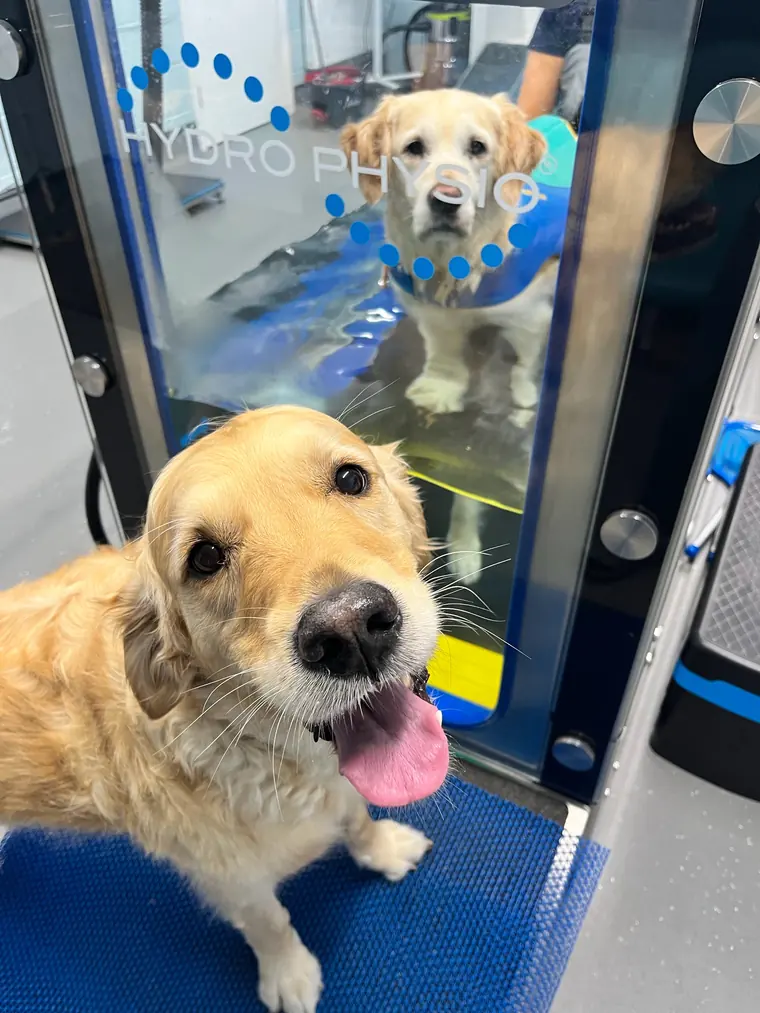
Controlled, supported therapeutic exercise
Hydrotherapy is a complementary therapy that uses warm water and controlled exercise to aid recovery, reduce pain and build strength. It's ideal for post-surgical rehab, orthopaedic and neurological conditions, and weight management, especially for dogs who struggle to exercise on land.
Our underwater treadmill lets us tailor every programme. By adjusting the water level and belt speed we can target specific joints and muscles, and because the treadmill is so controlled, we can often start working with dogs sooner after surgery to kick-start their rehabilitation.
Buoyancy
Supports the body and takes pressure off joints, encouraging weight bearing and a greater range of movement than your dog may manage on land.
Resistance
Walking against the water builds muscle and cardiovascular fitness, ideal for dogs on restricted land exercise, and highlights any problem areas.
Warmth, 30–32°C
Sanitised water kept at 30–32°C helps relieve pain, ease muscle spasm and boost circulation, while water pressure can help reduce swelling.
Glass sides
Clear glass sides let us watch every step in real time and adjust the session as your dog moves.
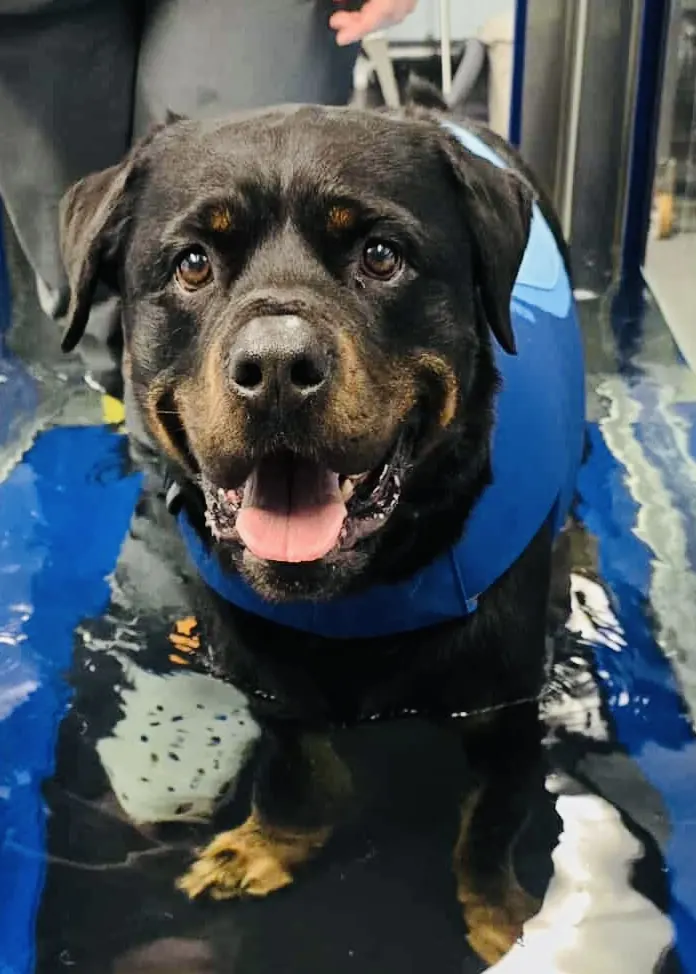
Benefits of treadmill v pool
- 1
More controlled weight-bearing
Water depth can be adjusted to alter how much weight the dog carries through its limbs. This is particularly useful after surgery or with painful joints.
- 2
Encourages a more normal gait pattern
The dog walks rather than swims, allowing you to work directly on gait re-education, limb placement and symmetrical movement.
- 3
Excellent for neurological rehabilitation
The slower, supported movement gives the therapist more opportunity to assist paw placement, proprioception and correct stepping patterns.
- 4
Controlled speed
Treadmill speed can be precisely adjusted to suit the individual dog and the aim of the session.
- 5
Targeted strengthening
Water resistance increases the muscular effort required during walking while buoyancy reduces joint loading.
- 6
Can improve joint range of motion
Water depth, speed and movement can be manipulated to encourage increased flexion and extension of particular joints.
- 7
Therapist can closely assess gait
Because the dog remains visible and is moving in a predictable direction, we can observe stride length, foot placement, weight distribution and compensatory patterns throughout treatment.
- 8
Often better for post-operative rehabilitation
Exercise can be introduced gradually and progressed in a measurable way by changing water depth, speed, duration and repetitions.
- 9
Useful for dogs that aren’t confident swimmers
Many dogs tolerate walking on an underwater treadmill better than being asked to swim.
- 10
Greater control over exercise intensity
Sessions can be divided into short work/rest intervals, making it easier to prevent fatigue and deterioration in movement quality.
- 11
Allows hands-on assistance
The therapist can use manual support and facilitation techniques where appropriate to encourage correct movement.
- 12
More functional movement
Walking is directly relevant to the dog’s everyday mobility, whereas swimming uses a different movement pattern and is completely non-weight-bearing.
SafeEffectiveControlledRehabilitateStrengthenRestore
Conditions hydrotherapy can help
Every programme is tailored to your dog. Hydrotherapy can benefit many conditions, including:
- Hip dysplasia
- Elbow dysplasia
- Cruciate ligament rupture
- Arthritis
- Spinal disease, spondylosis & CDRM
- Fractures
- Joint replacements
- Patella surgery
- FHNE
- Soft tissue injuries
- Joint dislocations
- Joint OCD
- Muscle atrophy
- Conformational support
- Weight management
- Fitness & conditioning
Hydrotherapy options
Every session includes a health check and aftercare advice.
Rehabilitation
Pre & Post surgery, injury, orthopaedic and neurological rehab
Maintenance
Ongoing maintenance of musculoskeletal and neurological conditions
Fitness
Maintenance of fitness and conditioning, ideal for working or sporting dogs
Your first visit and beyond
We know a first appointment can feel daunting, so we take our time. You're welcome to sit back and relax with a hot drink while we look after your dog.
Initial assessment at least 1 hour
Time for your dog to settle into the centre. We go through the vet referral form in detail, talk about what your vet has advised on exercise, your concerns and goals, then weigh your dog and take muscle measurements.
Health check every visit
Before each session we check eyes, ears, coat and skin, watch your dog's general movement and ask how they've been since last time. A gait assessment helps us plan the session.
Shower, treadmill, shower up to 40 mins
A warm shower before the treadmill warms the muscles and keeps the water clean. Your dog walks in short bursts with rests, for a maximum of 15–18 minutes on the treadmill. Early sessions may be very short. Afterwards, another shower removes bromine from the coat, then we towel and warm-air dry (only if your dog is happy with the dryer).
Progress you can see
We explain our findings and aftercare after every session. Your dog is re-weighed and re-measured every 9–10 sessions, every session is recorded, and we send feedback reports to your vet regularly.
How many sessions will my dog need?
It's hard to say in advance, as every dog is different. We usually recommend 1–2 sessions a week for the first 3–4 weeks to kick-start muscle growth and recovery, then reducing for a further 4 weeks or more depending on results, before moving to fortnightly or three-weekly sessions. Major problems such as spinal injuries or paralysis may need many more sessions.
Before and after a session
Before
- No food for 2 hours before the session (fresh water is fine). If medication must be taken with food, book around 2 hours after feeding.
- Let your dog go to the toilet before the session, so arrive a little early.
- Please make sure your dog arrives clean, not muddy.
- Bring the signed vet referral form to your first session, plus a towelling coat, fleece or dry robe for the journey home.
After
- No food for 2 hours after the session. Fresh water should be available, but avoid excessive drinking.
- Please avoid long walks after a session, but a short, slow and gentle walk is perfect, as it helps stop your dog getting stiff.
- Keep your dog warm and out of draughts, with a coat on until they're fully dry.
- Contact us and/or your vet with any concerns.
A vet referral is required before treatment
We work under the Veterinary Surgeons Act 1966 and the Veterinary Surgeons (Exemptions) Order 2015, so we need your vet's permission before we can begin, for every type of session, including fitness and conditioning. Download the form, ask your vet to sign it, and bring it to your first visit.
Hydrotherapy questions
How long is a session?
Will my pet insurance cover hydrotherapy?
Will my dog be dried afterwards?
Does my dog need to be fit or friendly to come?
Book a hydrotherapy session
Call 07359 774 226 or email aquacanine13@gmail.com. Unit 5, Brechin Business Centre, 10 Southesk Street, Brechin DD9 6DY.